Customer journey visibility & marketing strategy in the age of AI
Key takeaways
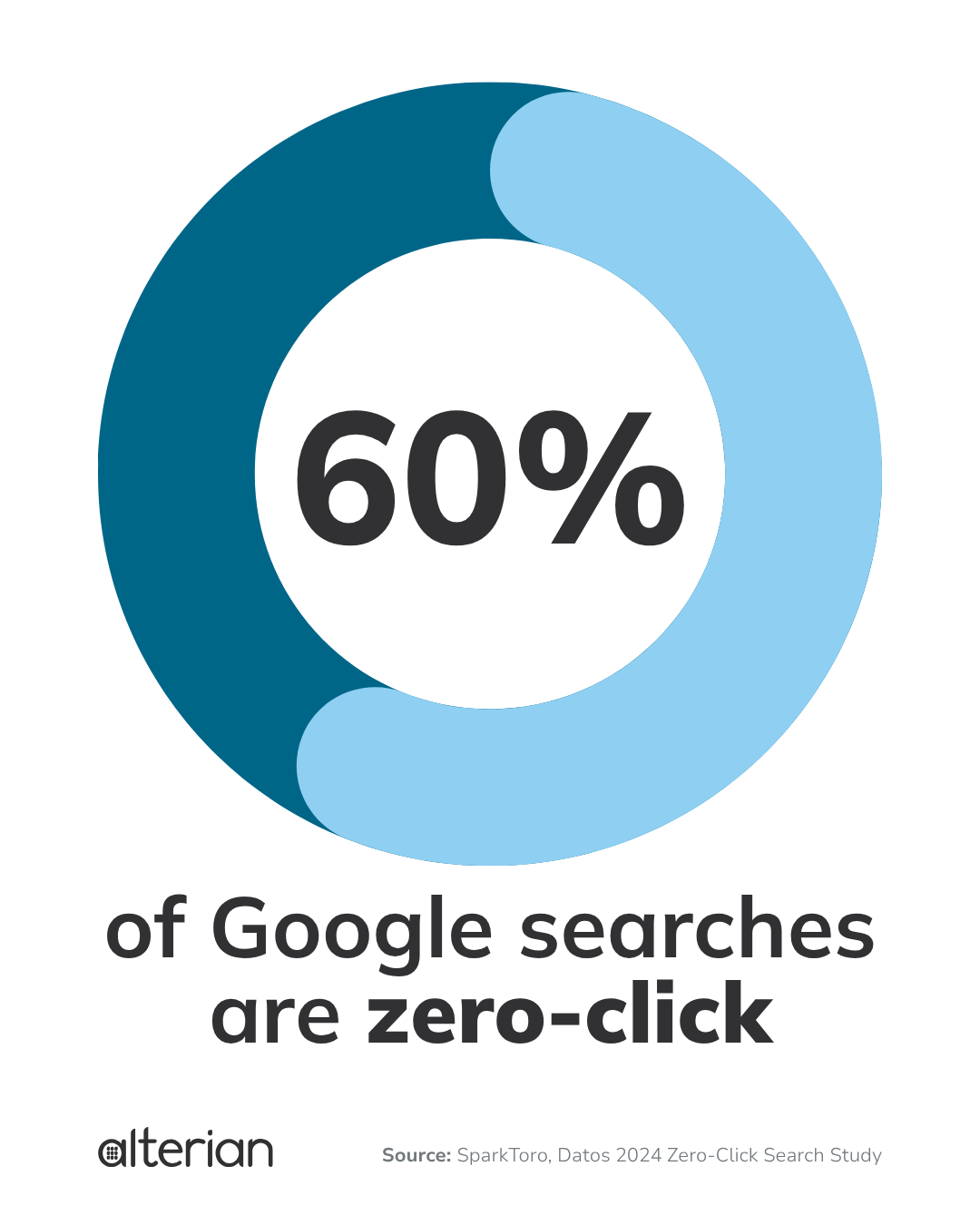
Zero-click behavior is rising—roughly 60% of U.S. Google searches end without a click, reducing measurable traffic and visibility.
High-performing teams use data to identify impactful journey moments first, then apply testing to validate and refine—not discover—what works.
Journey intelligence helps digital marketers think beyond funnel optimization and align with other teams.
The marketing funnel isn’t the full story
A decade ago, brands could still steer purchase decisions with a well-optimized funnel: keyword → landing page → conversion. Attribution was imperfect, but directional. You could test, iterate, and improve performance within your channels.
Today, consumers zigzag across reviews, social, marketplaces, comparison sites, influencers, forums, apps, store visits, customer support, back to search, then… an AI-generated answer that never sends them to your site.
GenAI and zero-click search strip visibility from marketers
In a 2024 zero-click search study with Datos, SparkToro estimated that about 60% of Google searches in the U.S. and Europe ended without a click to the open web.
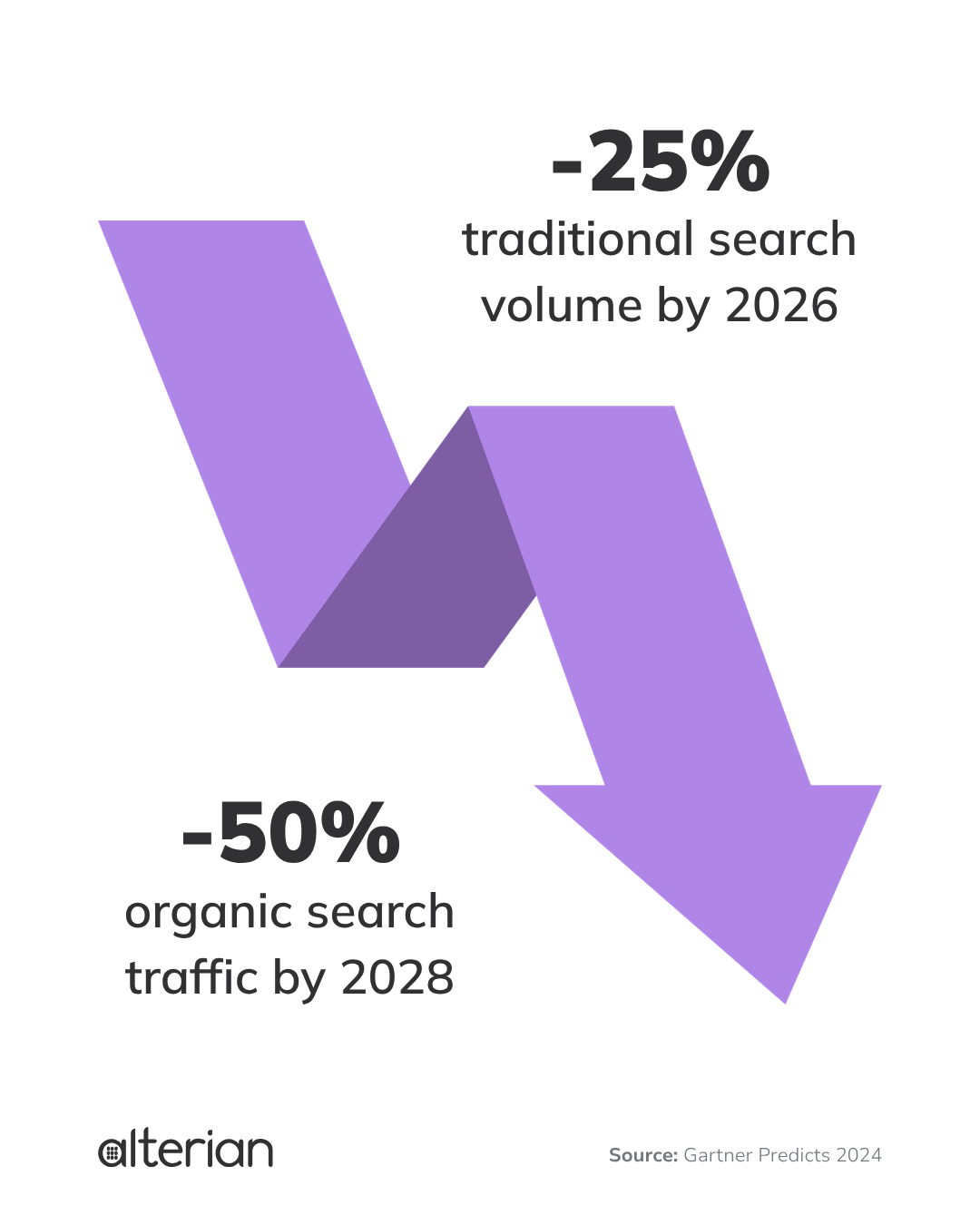
Gartner predicts the shift will continue to accelerate, with traditional search volume expected to decline by 25% in 2026 and organic search traffic dropping by more than 50% by 2028 as generative AI becomes the default discovery layer.
This is the tension modern digital marketers are navigating.
Your role in the larger customer journey is shrinking—not because your brand matters less, but because consumers have more ways to evaluate, compare, and decide without you.
So, what happens when you only “own” a fraction of the journey?
The visibility gap: Where digital marketers are losing influence
The marketing funnel reflects what you control—not the reality of actual customer behavior or purchase decisions, which have become increasingly varied, fragmented, and less dependent on brand-driven interactions.
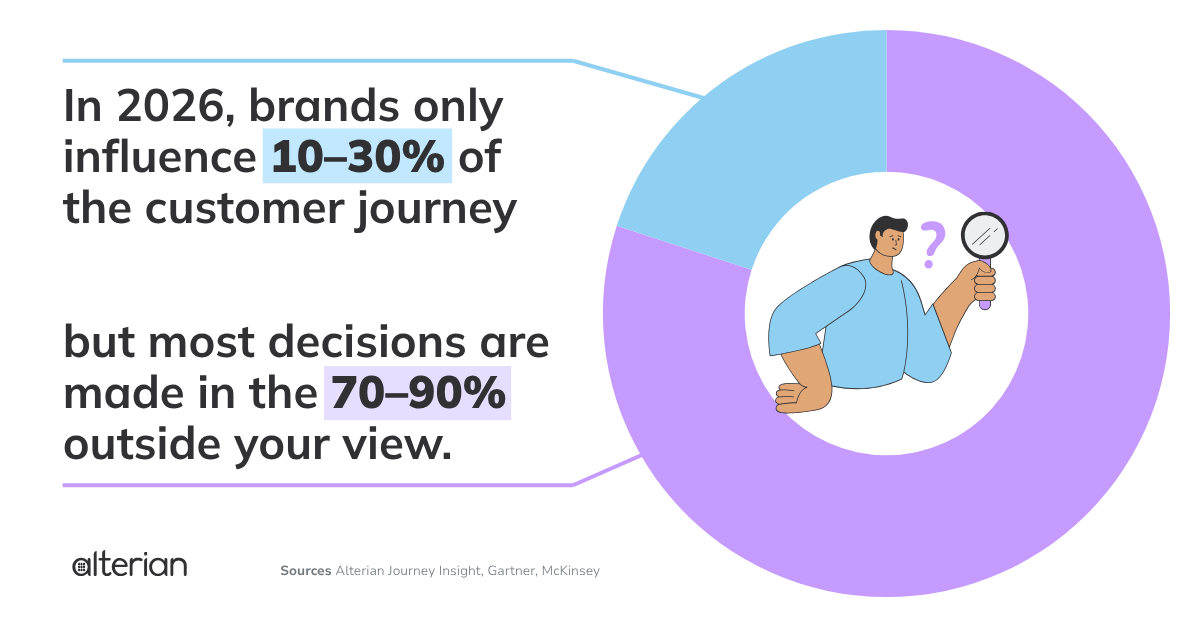
Across industries and market segments, data from Journey Insight shows that only 10–30% of the overall customer journey occurs within brand-owned touchpoints.
That means most of the journey shaping your outcomes is happening outside of your channels and campaigns, therefore outside of your analytics tools.
This is the customer journey visibility gap—and it’s where marketing performance is increasingly won or lost.
Why optimizing the funnel alone is no longer enough
For digital marketers, this creates a structural challenge. You’re still accountable for performance metrics like conversion rate, cost efficiency, and pipeline contribution, but your optimization surface area is shrinking.
So, what happens when your funnel only captures a fraction of the decision-making process?
Every moment you do influence becomes more valuable—and more fragile.
Small leaks don’t stay contained. An issue in one step can trigger a chain reaction and compound across a journey you can’t fully see.
As an example, let’s say:
A customer hesitates on your pricing page
They leave to do more research or compare alternatives
They encounter competitor messaging or reviews
Their perception shifts before they return (if they return at all)
A misstep in a critical moment with your customer doesn’t just reduce conversion, it pushes people back into the wilderness where competitors, aggregators, and AI summaries shape the next decision.
The shift from funnel optimization to journey intelligence
The most effective digital marketers aren’t abandoning the funnel, they’re reframing it. The funnel is no longer the system—it’s a subset of a much larger, dynamic journey.
To compete in this environment, you need to answer new questions:
Where are customers going before they reach us?
Where do they go when they leave?
What—or who—is shaping their decisions?
Which touchpoints actually influence outcomes?
Where are we losing to competitors—and why?
What’s the ROI if we fix it?
This is where traditional analytics fall short. Most tools are designed to measure and optimize what happens inside your channels, but the majority of decision-making happens outside them.
Understanding that broader context of the customer journey is what turns optimization into strategy.
A practical way to strengthen your strategy
If the funnel is incomplete, what changes? Not your entire strategy, but your level of visibility.
Here are four key steps to shift your marketing strategy in 2026:
1. See beyond your funnel
You already know what’s happening on your channels. Now, you need to see the parts of the journey you don’t control—that’s where most customer decisions are made.
Without visibility into that activity, you’re optimizing in isolation. You may improve what’s measurable, but miss the external factors shaping outcomes before and after customers engage with your brand.
2. Focus on high-impact moments
Not every touchpoint matters equally. The goal is to identify where influence is actually created—or lost.
Some moments disproportionately shape perception, preference, and conversion. Without clarity on which steps drive outcomes, it’s easy to over-invest in low-impact optimizations while missing the moments that truly matter.
3. Prioritize with evidence
Applying “best practice” on autopilot or following your intuition aren’t enough. You need clear, data-backed justification for where to invest your time and budget.
Testing and iteration still play a critical role—but they should be used to validate and refine the right opportunities, not to discover them in the first place. Relying on trial-and-error to find what matters is slow, expensive, and often wastes budget on low-impact initiatives.
4. Align teams around a shared view of the journey
A fragmented view leads to fragmented decisions. To define key business goals and coordinate across teams, you need a shared, data-backed plan.
When marketing, product, CX, and support operate from different assumptions, optimization efforts become disconnected. A unified view of the journey ensures teams are aligned around the same priorities and working toward measurable outcomes.
This is the shift from funnel optimization → journey intelligence.
Why digital marketers are stuck—and what’s missing
This is where many teams stall.
You’re expected to recommend changes that cut across teams—marketing, CX, product, sales, support—yet “best practice” and gut feel don’t win budget anymore. Leaders want proof, but the data you rely on is incomplete.
That leads to familiar challenges:
Conflicting performance signals across tools
Difficulty proving ROI before action
Internal misalignment on priorities
Without visibility into the full journey, even strong hypotheses are hard to defend. And in today’s environment, decisions that can’t be defended don’t get funded.
Closing the gap with journey intelligence
This is the gap Alterian Journey Insight was built to close.
While most analytics tools focus on owned-channel performance, Journey Insight reveals the unseen majority—the real, end-to-end journeys customers take across brands, channels, and devices—then translates that complexity into decisions you can act on.
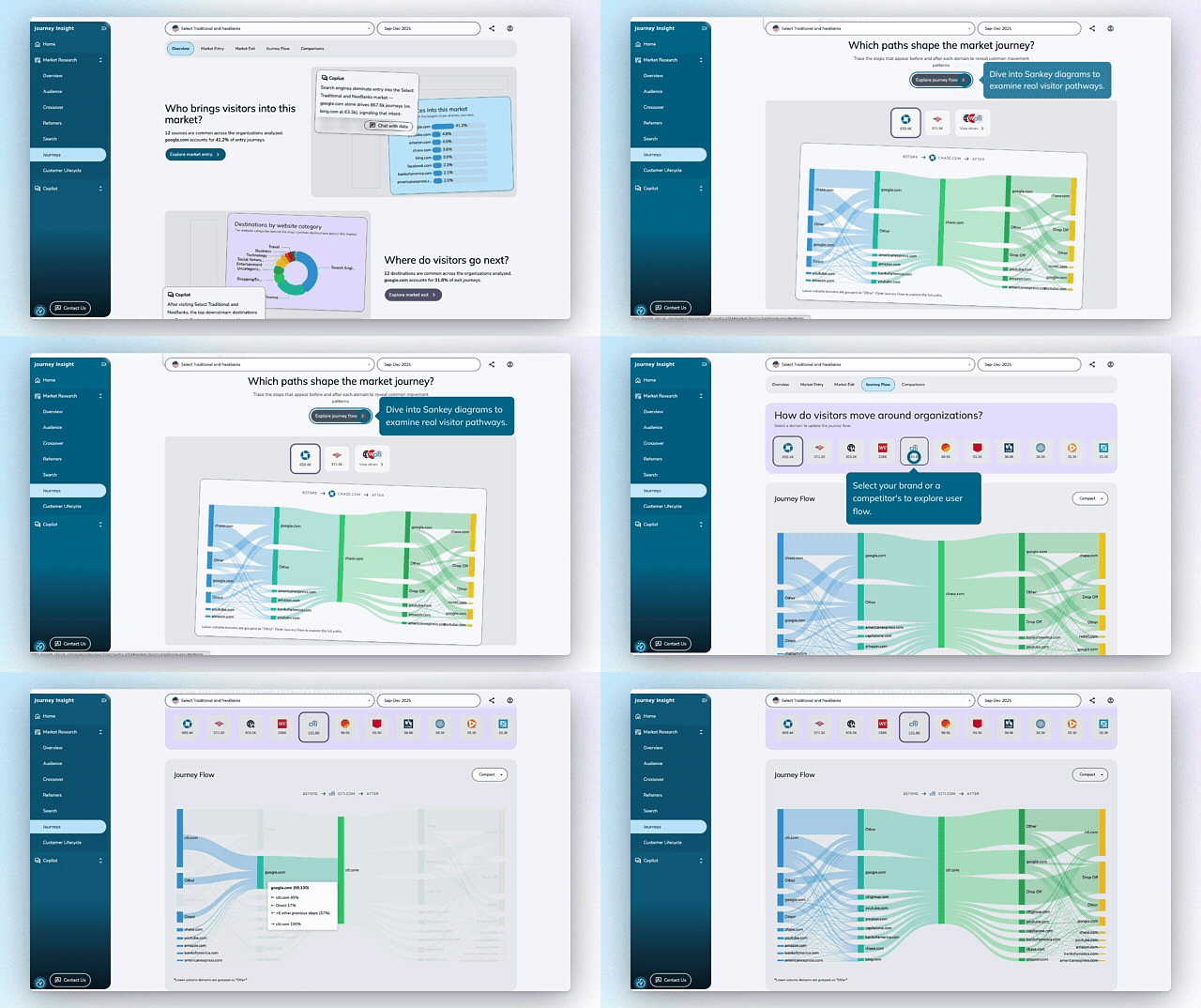
It provides visibility into how customers discover options, evaluate alternatives, move between competitors, and seek support or validation across the full market, not just within your ecosystem.
This allows digital marketers to move from assumptions to evidence by:
Benchmarking performance against competitors
Identifying high-impact opportunities
Prioritizing actions with measurable outcomes
Because the goal isn’t more data—it’s better decisions.
In an AI-driven landscape, clarity is your competitive advantage
“More traffic” isn’t the magic solution to increasing customer acquisition or replacing lost retention revenue.
In a landscape shaped by AI, zero-click behavior, and fragmented journeys, the advantage goes to teams who make every brand-controlled moment count. They understand what’s really happening in their market and can act on it.
That clarity enables:
Better prioritization of effort and budget
Stronger alignment across teams
More efficient and predictable growth
When you can see the full journey, you can focus on what truly matters.
Get the insights you need to meet your goals
If you’re feeling the visibility gap widening, you’re not alone.
The solution isn’t to optimize "harder" within the same constraints. Marketers need to expand their perspective to measure what’s really happening, not just what’s visible.
Explore Alterian Journey Insight to understand your full customer journey and turn fragmented, AI-driven behavior into a strategy you can defend, fund, and deliver.
Critical insights in minutes, not months
Sign up for our robust Free Plan in just a few minutes.
See the latest journey insights
How AI has changed customer journeys (and why most brands can't see it)
AI tools like ChatGPT are reshaping how customers discover brands. Learn why most journeys are invisible—and how market-wide insight changes strategy for GEO.
GEO isn't just SEO for AI—it's a competitive strategy
Generative Engine Optimization (GEO) goes beyond SEO for AI. Learn how AI reshapes customer journeys, comparison, and competitive strategy.
The new era of journey intelligence
Discover how Alterian’s Journey Insight reveals the 70–90% of customer journeys brands can’t see—transforming hidden behavior into actionable intelligence.